
Post 39. The Ghost in My Grip
Lessons in patience, persistence, and presence — from a body relearning itself.

Every now and then, my brain still tells my hands they can make a fist. As if all my fingers were fully functioning, all knuckles intact. They’re not. Most of my finger joints are fused. And yet, the message still sometimes goes out like nothing’s changed.
It’s a strange sensation—a ghost of muscle memory. But it reminds me of what it was like at the beginning, when those were the only signals my brain knew how to send. The old hands were gone, but the messaging system hadn’t been updated.
I had to relearn how to do everything. Not with new tools, but with inadequate ones. You only realise how elegantly designed hands are once you lose their function. After more than 20 operations, my left hand eventually regained about 50% of its ability. My right—the previously dominant one—reached around 20%. But at the start of this journey, even that was a distant goal.
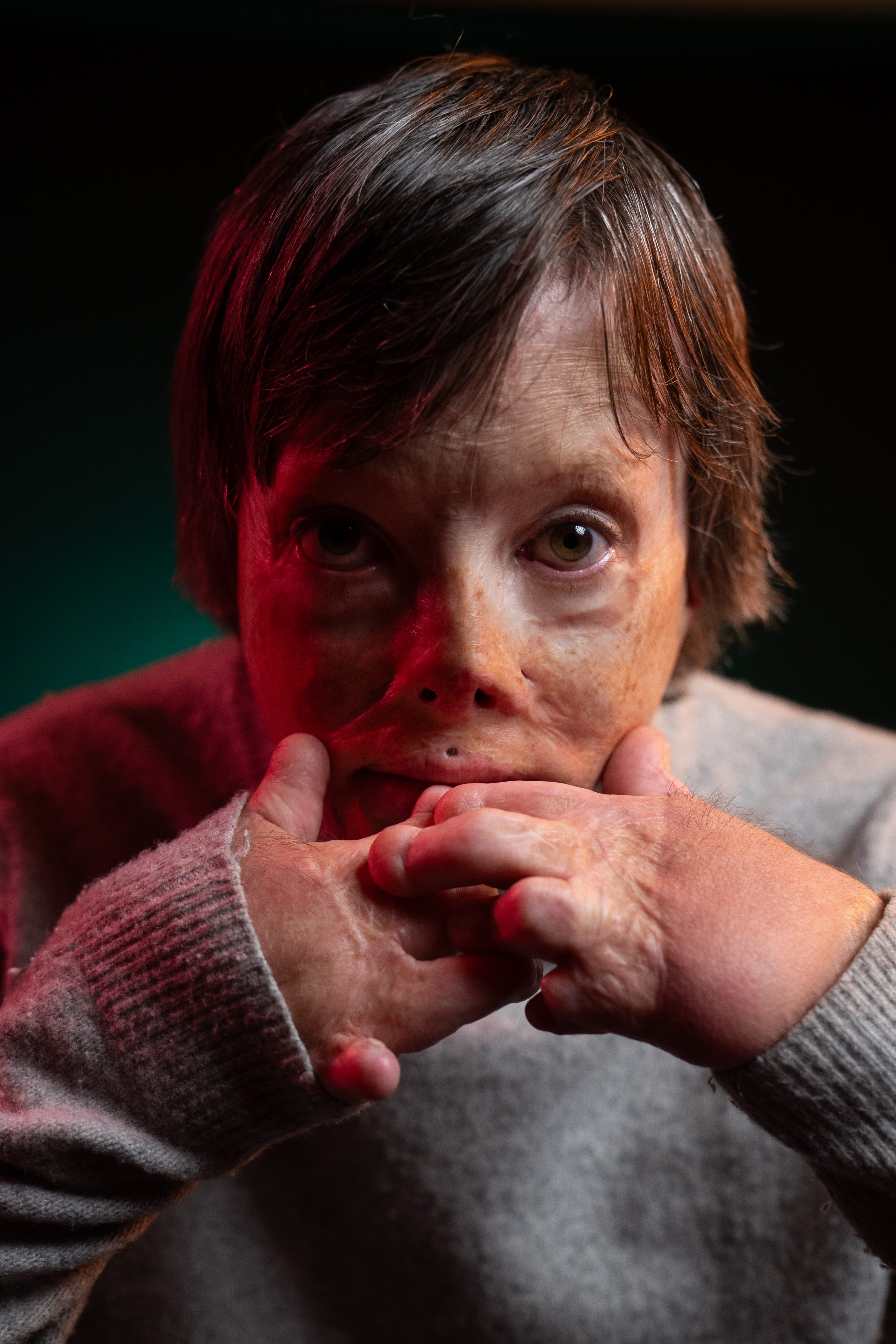
In autumn 1992, my right hand was a rigid plank, supporting what little movement my left could muster between thumb, index, and middle finger. We use our hands thousands of times a day, most of it on autopilot. I had to consciously rebuild every action. My brain was willing—but still wired to limbs that no longer existed in its image.
Sarah Wright, my occupational therapist, helped me rewire. She also fitted me with my pressure garments, but her most lasting impact came through guiding me—patiently, calmly—across the OT department rug like a toddler relearning basic tasks. It was exhausting. We underestimate how much energy the brain uses when it can’t rely on habit or muscle memory.
Sarah never made me feel patronised. Just supported. Years later, I learned she lost her first child— forced abortion and stillborn, just weeks before her due date. A cruel twist, especially considering the tragic link between three of my most important carers and child loss. It’s something I often reflect on.
Controlled exercises in the OT room were one thing. Out in the real world, it was a different story. Every object, every interaction became a small puzzle. Opening a door while holding something? Complex. Pouring milk, tying laces, using cutlery—nothing came naturally anymore.
I was stubborn—still am—and desperate for independence. If I was alone, I’d try things for hours. Clutching objects under my arms. Pinning things to a surface. Balancing on my stiff right hand so my left could get the job done. Every operation was a hardware update. Then it was up to me to write new code to make it all work.
Eventually, I did. Not without a lot of frustration, but with persistence. My brain, still plastic from puberty, had the ability to adapt. It just took effort.
That level of lateral thinking—born out of necessity—stuck with me. It helps me now, not just practically, but emotionally. I can sit with complex thoughts and dark feelings, think steps ahead, and work my way through it. That clarity started here.
I’m looking at my hands right now—and for once, I can see no cuts or grazes. That’s rare. My brain still thinks they’re a different shape. I knock them into things all the time. Scar tissue doesn’t bounce—it splits. I usually don’t notice until I see blood.
The world isn’t designed for people like me. Vending machines, packaging, public transport—all assume a standard hand.
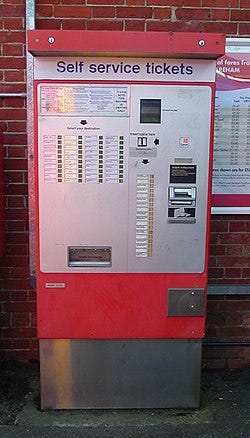
Just an example of my nemesis
Take train stations, especially ones from decades ago. Ticket counters had glass dividers with narrow slots. Staff would slide tickets and change partway through. Not far enough for me to reach. I’d struggle to collect them and an embarrassing interaction would occur.
Ticket machines weren’t any better. Coin returns and trays required long fingers and/or a flat palm. If there was a queue behind me, I’d sweat. Sometimes I left the change behind rather than struggle in front of people. Other times, if I had a pen or tool, I’d fish the coins out. Slowly, I got better at asking for help.
One time I dropped a bank card, ticket and some change on the floor while trying to put them into my wallet. Their retrieval meant planning like a military op. Pocket the wallet. Grab the ticket first. Use it to slide under the card and coins one by one as my fingers had no chance of picking them up alone, then exit the scene as quick as possible before organising sad items.
These were daily battles—mostly invisible, but relentless. I didn’t complain about how the world was set up or share about my experiences much. Not because it didn’t affect me, but because I refused pity that would normally come. That’s a currency I never accepted.
I kept those struggles between me and the voice inside. I focused on edging towards independence rather than the struggles.
It was this desire to regain independence that drove me. It made me curious, resourceful, determined. It shaped how I process tasks, systems, people, emotions. It gave me a quiet resilience that no one could see—but I could feel.
And it taught me something else: how to be present.
These experiences forced me to stay with each task—to think about what I was doing in the moment, not what was next. Learning presence was a by-product of adapting. But it’s become one of the most powerful tools I carry.
So the next time you find yourself frustrated, it might not be the task that’s hard—it might be your mind pulling you toward the next item on your list. Try staying with the one right in front of you. You might find something new in it.
I may not have the hands I once had. But I do have the mind they helped shape. And that’s a trade I’ve learned to live with.
Yet another brilliant post, Marc. It’s sometimes a shame that we don’t realise the value of something until we’ve lost it – our hands, our mind, but also the people willing to stand by us and support us. I suppose that’s life’s way of protecting us from being paralysed by too much gratitude. :)
Simultaneously, I want to quit writing and practice every day to produce something this powerful. You raise the bar my friend and I cannot wait til our paths cross again.